

Safe Linux operations
Linux Skills: Safe, Family-Aware Server Operations
A public Linux operations engine for Debian/Ubuntu and RHEL-family systems, covering provisioning, Bash, networking, services, security, storage, backups, troubleshooting, and recovery.
 Inspect on GitHub Linux Skills
Repository facts verified locally on 22 August 2026
Install
Add it to Claude Code or Codex
This engine installs as a native plugin for Claude Code, and its scripted installer works the same way from Codex or any terminal.
Native Claude Code plugin
/plugin marketplace add https://github.com/peterbamuhigire/linux-skills
/plugin install linux@chwezi-linux
Manual install (Claude Code, Codex, or any agent)
git clone https://github.com/peterbamuhigire/linux-skills
cd linux-skills
./install.sh --scope project      # macOS / Linux / Git Bash
.\install.ps1 --scope project     # Windows PowerShell
Both installers are cross-platform (macOS, Linux, Git Bash, and PowerShell) and wrap the same underlying installer script.
Direct answer
Linux Skills helps an operator inspect, change, recover, and hand over Linux server work with the distro family, authority boundary, rollback path, and verification target visible. It supports Debian/Ubuntu and RHEL-family systems instead of assuming that one command or service name fits every host.
Who it serves
Linux administrators, infrastructure engineers, service owners, support teams, and developers operating servers or automation safely.
48
Local SKILL.md files verified
Claude Code + Codex plugin
Installs as
/plugin install linux@chwezi-linux
Native command
2
Supported families
Non-negotiable operating rule
Human in the middle. Every time.
Nothing is considered finished merely because an AI tool or skills engine produced it. A responsible person reviews the facts, logic, sources, calculations, code, security, privacy, context, and quality of the output before it is published, deployed, submitted, or used to make a decision. For some actions, the engine must stop until the user explicitly types that they approve the action; approval must never be inferred from silence or a vague request.
Human responsibility: approve, correct, escalate, reject, stop, or roll back the work.
Engine responsibility: make the method, evidence, limits, review points, and approval pauses visible.
In practice
A second view of the work this engine supports
The visuals illustrate the domain; they do not replace evidence, controls, or the human review required before a consequential decision or action.
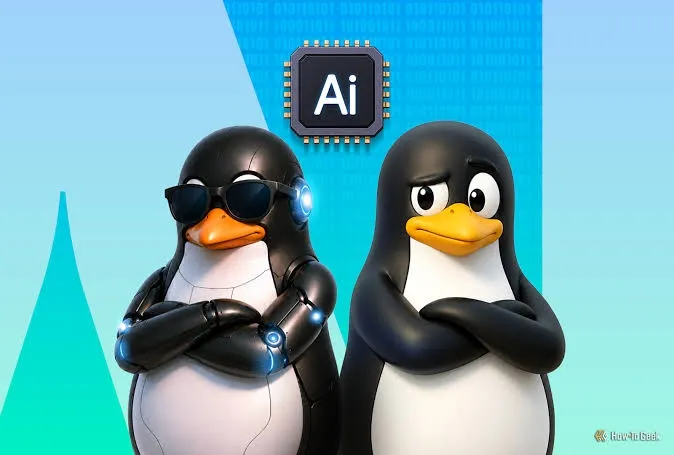
Capability map
What this engine covers
The list below is a plain-language summary of the repository's verified capability surface. It is not a promise that every project needs every skill.
- Debian/Ubuntu and RHEL-family provisioning, package management, services, web stacks, TLS, and networking.
- Bash scripting, common.sh abstractions, users, SSH, secrets, permissions, least privilege, and family-aware automation.
- Systemd, virtualisation, containers, databases, caching, monitoring, logging, observability, and health endpoints.
- Storage, performance, backups, restore, disaster recovery, hardening, firewalls, SELinux/AppArmor, audit, and incident learning.
How to use it
A repeatable route from request to evidence
Identify the family
Confirm the host, distro family, service layout, authority, current state, and operational risk before issuing commands.
Plan the change
Choose the narrowest specialist skill, define preconditions, backups, rollback, expected output, and stop conditions.
Change carefully
Use family-aware helpers and least privilege; preserve configuration, secrets, logs, and user work.
Verify and hand over
Check service health, security, logs, backups, monitoring, failure paths, and the operator-facing recovery procedure.
Good fit
When to use this engine
- You need a server hardening, deployment, backup, recovery, troubleshooting, web-stack, TLS, or monitoring runbook.
- A script must work across Debian/Ubuntu and RHEL-family systems without hardcoded service or package assumptions.
- An infrastructure change needs explicit authority, preconditions, rollback, validation, and handoff evidence.
- A Linux task crosses into software, security, current vendor facts, or formal operational documentation.
Boundaries
What it does not replace
- It owns Linux operations and operational evidence; it does not replace application engineering, finance, visual design, or formal SRS doctrine.
- Commands must not be issued against a production host without confirmed authority, context, backups, and recovery path.
- Current distro, security, vendor, compliance, and safety claims need source verification where they can change.
- It does not create evidence merely by writing confidently; source claims and project facts still need verification.
- It does not remove accountable human review, specialist judgement, approval authority, or professional sign-off.
- It does not authorise live account changes, client communications, production changes, or submissions without explicit permission.
Continue the route
Related first-party guidance
Chwezi Dev Engine
Route application engineering, APIs, databases, cloud, DevOps, and production software to the engineering engine.
Digital Research Skills
Verify current distro, security, vendor, compliance, and external operational claims through evidence-led research.
Linux Skills on GitHub
Inspect the public two-family Linux operations engine and its scripts.
Frequently asked
Questions about Linux Skills
Which Linux distributions does the engine support?
It is organised around Debian-family systems such as Debian and Ubuntu and RHEL-family systems such as Fedora, RHEL, Rocky, Alma, Oracle Linux, and compatible derivatives.
Does Linux Skills assume Ubuntu commands?
No. The operating model is family-aware and maps packages, services, firewalls, web configuration, and mandatory access controls to the detected family.
Can it make production changes automatically?
The skills define safe operational procedures, but authority, context, preconditions, rollback, and verification must be established before a live change.
Ready to discuss your project?
Every engagement begins with a conversation. Book a consultation to explore how Peter's experience can serve your organisation.